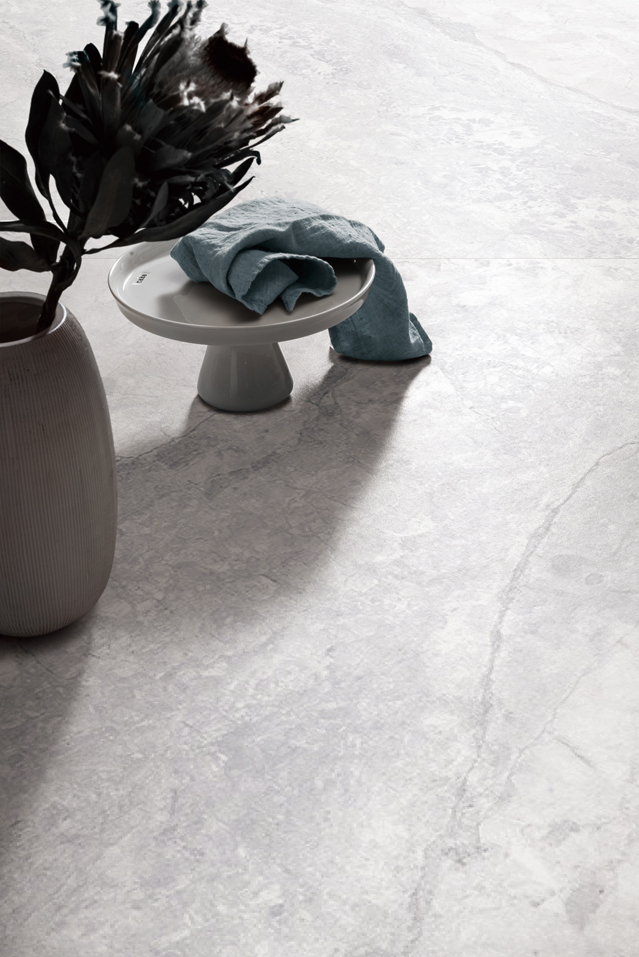


Tile Industry Enters Era of Systemic Innovation: Dual-Driven by Industrial Collaboration and Sustainable Development
Currently, China’s tile industry is undergoing a profound transformation from product innovation to systemic innovation. With the deepening implementation of the national “Dual Carbon” strategy and the reshaping of global supply chain patterns, the industry is exhibiting new development trends centered on industrial collaboration and oriented towards sustainable development. According to the latest industry research data, investment in green and intelligent transformation within the building ceramics sector increased by 32.7% year-on-year in 2024, and the number of industrial collaborative innovation projects grew by 45%, signaling the industry’s entry into a new phase of development.
Body:
I. Breakthroughs in Industrial Collaborative Innovation Models
Traditional industrial chains are being reshaped, with new models of industrial collaborative innovation becoming a defining feature of industry development. Upstream raw material R&D institutions are deepening cooperation with manufacturers, successfully developing high-performance ceramic raw material systems based on industrial solid waste. The recently achieved “multi-source solid waste collaborative utilization technology” can transform eight types of solid waste, including fly ash, steel slag, and construction waste, into stable, high-quality ceramic raw materials, achieving a comprehensive resource utilization rate of over 92% and reducing raw material costs by 35%.
Significant progress has been made in the collaborative innovation of equipment manufacturing and production processes. The “modular intelligent production line system” jointly developed by leading enterprises employs standardized modular design and digital twin technology to achieve flexible configuration and rapid reconfiguration of production lines. This system can complete production line restructuring within 72 hours based on changes in product types and market demand, increasing equipment utilization to over 85% and reducing product changeover time by 60%.
II. Comprehensive Upgrade of Green Manufacturing Systems
Green technology innovation is shifting from single-point breakthroughs to systemic construction. The industry has pioneered the establishment of a “full life-cycle carbon footprint management system,” which utilizes blockchain technology to track and certify the carbon footprint throughout the entire process from raw material extraction to product disposal. The newly released “Specification for Carbon Footprint Accounting of Building Ceramic Products” has become the industry’s first carbon management group standard, laying the foundation for a product carbon labeling system.
Technological breakthroughs have been achieved in water resource recycling systems. The innovatively developed “three-stage countercurrent circulating water treatment system,” utilizing physical, chemical, and biological treatment processes, achieves 100% recycling of production water, with water quality meeting drinking water standards. Concurrently, new advancements in waste heat recovery technology have been made; the new generation of “heat pump-type waste heat recovery devices” increases kiln waste heat recovery efficiency to over 80%, and the recovered thermal energy can be directly used for raw material drying and factory heating.
III. Accelerated Construction of Digital Ecosystems
Industrial digitization is evolving towards an ecological model. The “Ceramic Industry Cloud Platform” established by the industry integrates resources across the entire chain of design, production, sales, and service, achieving digital collaboration among all segments of the industry chain. Utilizing artificial intelligence algorithms, the platform can automatically generate tile installation plans based on architectural design drawings, optimizing material usage and reducing construction waste by over 15%.
The intelligent manufacturing ecosystem continues to improve. The “Smart Factory Operating System,” based on the industrial internet, achieves comprehensive interconnection between production equipment, inspection instruments, and logistics systems. Using machine learning algorithms, the system can autonomously optimize production parameters and predict equipment failures, enabling predictive maintenance and increasing overall equipment effectiveness to over 90%.
IV. Continuous Expansion of Market Application Scenarios
Product application boundaries are constantly being pushed. In the construction field, the newly developed “integrated structural and decorative ceramic curtain wall system” perfectly combines load-bearing structure with decorative function, increasing installation efficiency by 50% and reducing overall building energy consumption by 20%. In transportation, high-skid-resistant ceramic pavement materials have been successfully applied to special sections of highways, achieving a friction coefficient of over 0.85 and significantly improving driving safety.
Functional innovation continues to advance. The breakthrough development of “self-power-generating ceramic floor tiles,” using piezoelectric material technology, can convert the mechanical energy from footsteps into electricity, generating up to 5 watt-hours per square meter daily. Meanwhile, “smart sensing ceramics,” by embedding micro-sensors, can monitor environmental parameters such as temperature, humidity, and air quality in real-time and achieve data visualization through IoT platforms.
V. Innovation and Upgrade of International Cooperation Models
Global development has entered a new stage. The new model of “technical standard export + localized production” innovatively constructed by the industry has achieved remarkable results in countries along the “Belt and Road.” Chinese intelligent ceramic manufacturing standards have gained recognition and application in several countries, driving technological upgrades in local ceramic industries.
International R&D cooperation continues to strengthen. The “Advanced Ceramic Materials Joint Laboratory” established through cooperation between leading industry enterprises and internationally renowned research institutions has made breakthrough progress in cutting-edge fields such as ultra-high-temperature ceramics and bioceramics. The newly developed “porous gradient functional ceramics” has found important applications in aerospace, with temperature resistance exceeding 1800°C.
VI. Gradual Improvement of Sustainable Development Ecology
Industrial ecological innovation continues to advance. The “industry-university-research-application-finance” collaborative innovation system constructed by the industry integrates resources from R&D institutions, production enterprises, end-users, and financial institutions, forming a complete innovation ecosystem. Through this system, the cycle from R&D to industrialization for new technologies is shortened by 40%, and the conversion rate of innovation achievements increases to over 75%.
The circular economy model is developing in depth. The “Regional Circular Economy Industrial Park” established by the industry achieves collaboration among multiple sectors, including ceramic production, construction, and municipal solid waste treatment. Within the park, construction waste is transformed into ceramic raw materials, and solid waste from ceramic production is used in building material manufacturing, forming a complete material circulation chain with a comprehensive resource utilization rate exceeding 95%.
VII. Future Development Trends Outlook
Technological innovation will continue to deepen. By 2026, industry R&D intensity is expected to reach 4.2%, with key breakthrough areas including new ceramic materials, zero-carbon manufacturing technologies, and digital twin systems. The application of AI technology in product quality inspection and process optimization will become more widespread, potentially increasing production efficiency by over 30%.
Green development will become the industry norm. According to industry plans, by 2028, carbon emissions per unit product will decrease by 40% compared to 2020, and the proportion of clean energy usage will reach 75%. Green products will account for over 60% of the market, and circular economy models will be fully popularized.
Internationalization levels will significantly improve. China’s tile industry will deeply participate in reshaping the global ceramic industry landscape through the export of technical standards and intelligent manufacturing solutions. By 2030, China is expected to become a global center for ceramic industry technological innovation and a demonstration base for green manufacturing.
Currently, China’s tile industry, guided by systemic innovation, supported by industrial collaboration, and aimed at sustainable development, is constructing a new framework for high-quality growth. In this new development stage, the industry will continue to deepen innovation-driven development, strengthen industrial collaboration, promote green development, and make greater contributions to the advancement of global building materials and the improvement of human living environments.
Related Posts
2026 Global Tile Market Trends: Australian Import Demand Surges 35%, Large-Format Slabs Become Mainstream