

Innovation-Driven and Green Transformation Propel Tile Industry Toward High End of Value Chain
Currently, China’s tile industry is in a profound period of transformation. Under the combined effects of evolving market demand, tightening environmental requirements, and changing international trade dynamics, this traditional building materials sector is undergoing an unprecedented shift. The focus is moving from pursuing scale expansion to emphasizing quality enhancement, and from relying on cost advantages to building an innovation-driven development model, propelling the entire industry chain toward higher-value domains.
Product Innovation: From Decorative Materials to Spatial Solutions
Product innovation has become a key lever for tile companies to enhance competitiveness. In recent years, the market for large-format ceramic slabs has grown rapidly, with its applications continuously expanding from traditional floor and wall coverings to areas such as countertops, furniture, and laboratory surfaces. Recently introduced “ceramic fabric” concept products, only 3mm thick and featuring good flexibility, are suitable for curved surfaces and spaces with special shapes, breaking the traditional perception of ceramic materials as rigid. The market share of tiles with special functions like antibacterial properties, self-cleaning, and photocatalytic purification is steadily increasing, meeting higher hygiene and health requirements in specific settings such as healthcare, education, and public transport. These innovative products not only expand the application boundaries of tiles but also significantly enhance their added value and market competitiveness.
Green Manufacturing: Technological Innovation Under Environmental Pressure
Continuously tightening environmental policies are pushing the tile industry to accelerate its green transition. In energy saving and consumption reduction, breakthroughs in new double-layer kiln technology, achieved by optimizing thermal structure and efficiently recovering waste heat, have reduced comprehensive energy consumption per unit product by approximately 20% compared to traditional kilns. The proportion of clean energy usage continues to increase, with many enterprises introducing photovoltaic power generation into their production processes and electrifying some production stages. In resource recycling, technologies for utilizing industrial solid waste and construction waste in tile production are maturing, with maximum incorporation ratios exceeding 40%, significantly reducing reliance on natural mineral resources. In end-of-pipe treatment, new integrated dust removal, desulfurization, and denitrification technologies, along with wastewater zero-discharge systems, are being promoted within the industry, helping companies achieve cleaner production.
Intelligent Manufacturing: Digital Transformation Reshapes Production Models
The development of digital factories characterized by automation, informatization, and intelligence is profoundly changing production methods in the tile industry. From automatic raw material batching and press linkage to 3D visual inspection on glazing lines, robotic automatic palletizing, and AGV intelligent logistics with digital warehouse management systems, overall line automation levels have significantly increased. Deep integration between Manufacturing Execution Systems (MES) and Enterprise Resource Planning (ERP) systems enables end-to-end digital management from order placement to product shipment, resulting in more optimized production scheduling, more precise quality control, and more predictable delivery cycles. The application of big data and artificial intelligence technologies is playing an increasingly important role in areas such as raw material performance analysis, process parameter optimization, automatic product defect recognition, and intelligent energy consumption monitoring.
Consumption Upgrade: Growing Demand for Design Aesthetics and Personalization
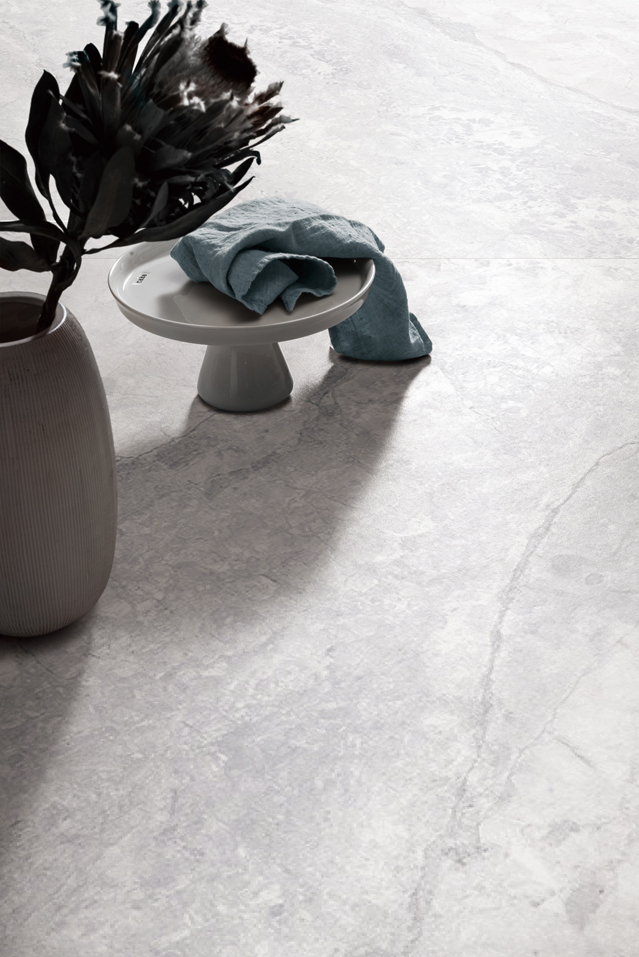
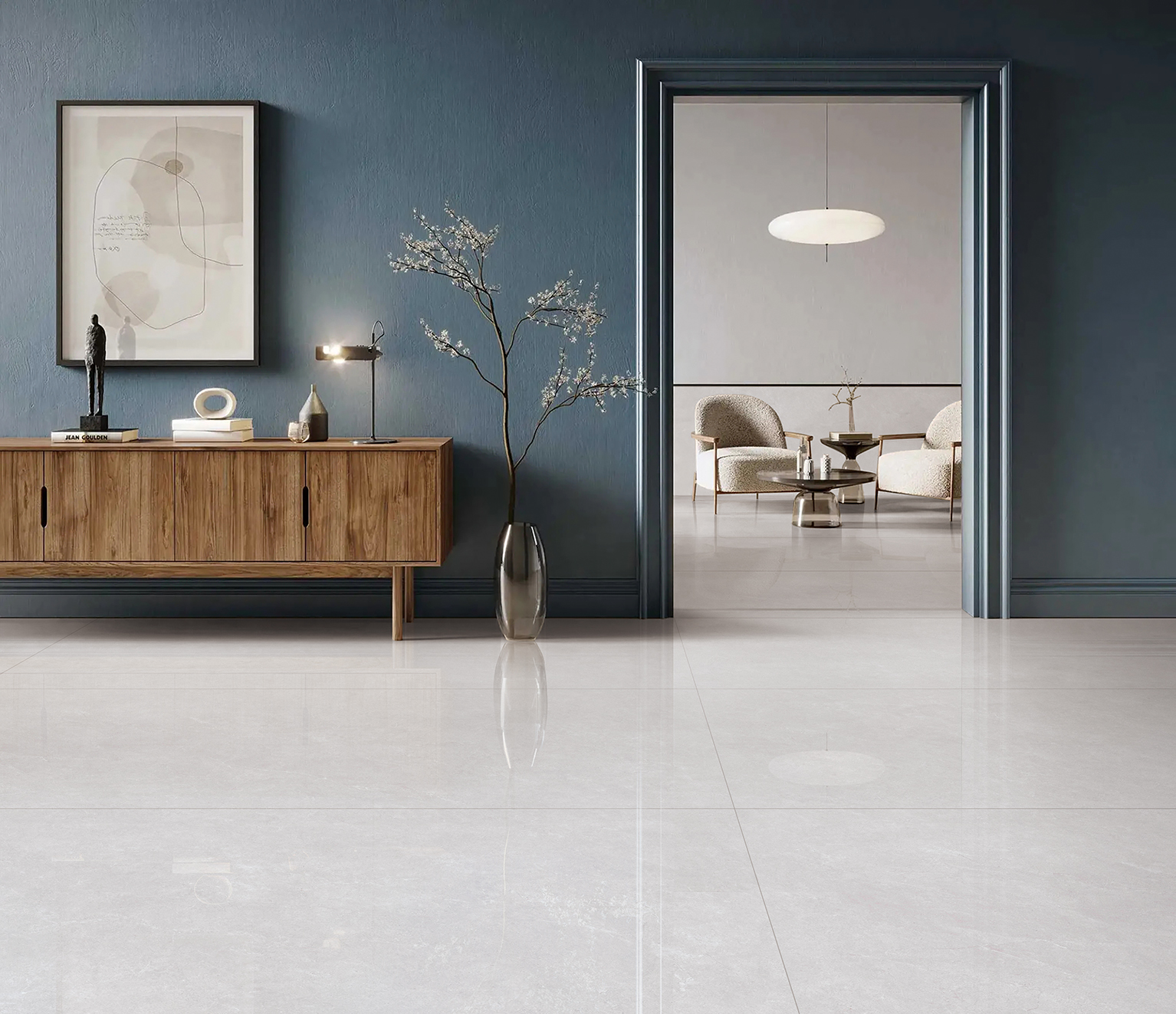
Changing consumer demand is driving tile products toward greater aesthetics and personalization. In color, soft, low-saturation Morandi color palettes remain popular, while natural and understated hues like concrete gray and sandstone yellow are highly favored. In surface finishes, the textural simulation of natural materials like stone, wood, and metal is becoming increasingly realistic, with matte and soft-gloss products prized for their comfortable feel. Design-wise, the influence of minimalism and wabi-sabi aesthetics is deepening, boosting demand for complementary large-format plain tiles and micro-cement texture tiles. Simultaneously, consumers are paying more attention to brands, design services, and integrated spatial solutions, driving the industry’s shift from merely selling products to offering comprehensive value encompassing “product + design + service.”
Market Structure: Balancing Domestic Refinement and Global Expansion
In the domestic market, renovation of existing homes and partial remodeling have become significant growth drivers, spurring demand for small-batch, multi-format, and specialized products. The engineering channel and retail channel are further differentiating, with continuous innovation in product strategies and marketing models tailored to each. In the international market, facing trade barriers in traditional export markets, the industry is actively exploring emerging markets along the “Belt and Road” such as Southeast Asia, the Middle East, and Africa. It is also pursuing local manufacturing through overseas investments to mitigate trade risks. High-value-added, high-tech functional tiles and large-format slabs are becoming the new calling cards for Chinese tile exports.
Future Outlook: Sustainable Development and Value Innovation
Looking ahead, technological innovation, green and low-carbon development, and design aesthetics will be the core forces driving the tile industry. The sector will place greater emphasis on the environmental impact across the entire product lifecycle, transitioning toward a circular economy model. Intelligent manufacturing will deepen further, enabling more flexible, efficient, and precise production. Product innovation will more closely align with human-centric needs for health, comfort, and personalization. The role of tiles will evolve from being merely a building envelope material to increasingly becoming a spatial element that embodies function, aesthetics, and emotion. Through continuous value innovation, China’s tile industry is poised to secure a more advantageous position in the global value chain and achieve high-quality development.
Related Posts
2026 Global Tile Market Trends: Australian Import Demand Surges 35%, Large-Format Slabs Become Mainstream