

New Wave in the Tile Industry: Digital Technology and Sustainable Design Reshape the Landscape
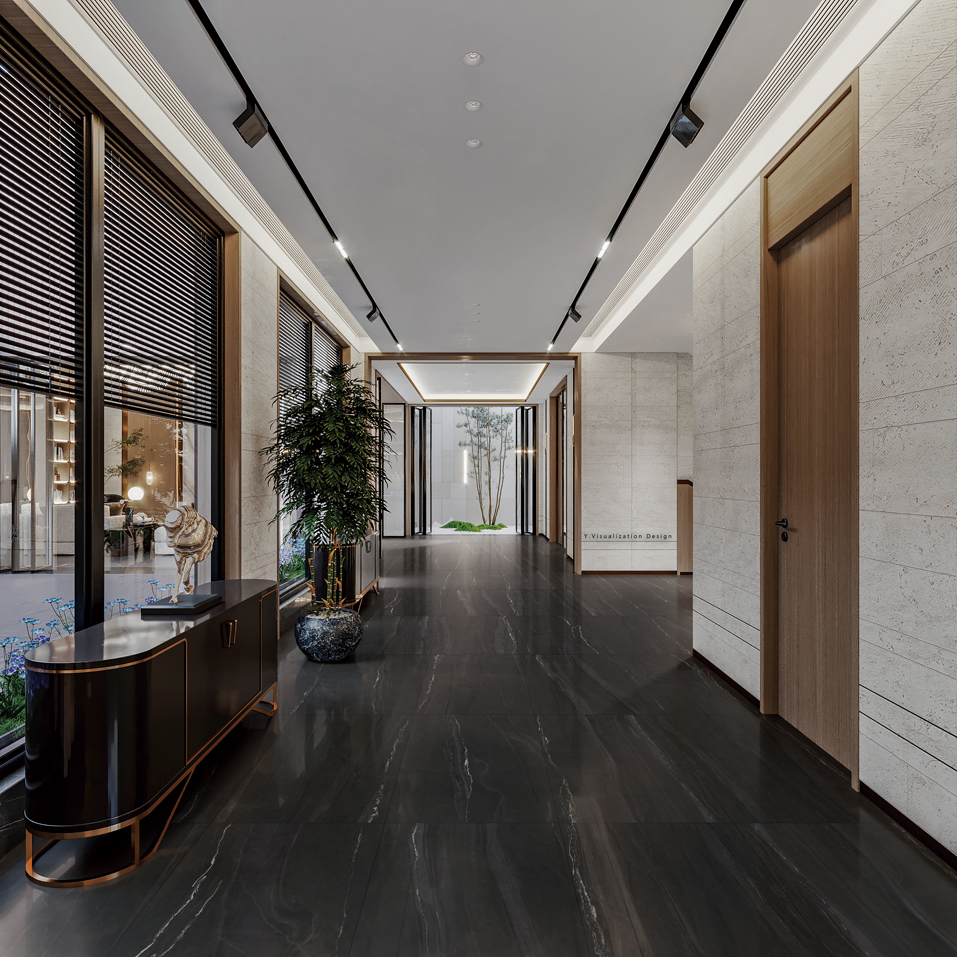
Against the backdrop of profound adjustments in the global economic landscape, China’s tile industry is undergoing a comprehensive transformation from manufacturing to value creation. The industry is no longer confined to its traditional positioning as a building material but is evolving deeply toward technological integration, artistic expression, and ecological sustainability, demonstrating unprecedented innovative vitality and developmental resilience.
Technological Innovation: Industry Metamorphosis Powered by Digitalization
The deep application of digital technology is fundamentally altering the face of the tile industry. In the R&D and design phase, generative artificial intelligence shows immense potential. By analyzing global design trends, architectural styles, and regional cultural characteristics, it can automatically generate highly original texture and pattern proposals, shortening the design cycle from several weeks to just hours. Breakthroughs in additive manufacturing technology enable the single-step forming of ceramic components with complex three-dimensional structures, achieving “impossible geometries” unattainable by traditional techniques.
In quality control, the combined application of quantum dot sensing technology and hyperspectral imaging systems achieves nanoscale detection accuracy for micro-defects on tile surfaces. The latest intelligent optical inspection systems, deployed in production lines, can perform real-time analysis of 127 quality parameters—including color uniformity, pattern clarity, and dimensional accuracy—simultaneously at high speeds, maintaining finished product qualification rates steadily above 99.97%.
Material Breakthroughs: Functional Ceramics Herald a New Era
New material development is expanding the application boundaries of tiles. Phase-change energy storage ceramics, which embed phase-change materials into the ceramic matrix via microencapsulation technology, possess intelligent temperature-regulating functions for absorbing, storing, and releasing heat, showing great potential in building energy efficiency. The latest generation products can store 1.2 megajoules of thermal energy per square meter, reducing air conditioning energy consumption by up to 40% in regions with significant day-night temperature variations.
Self-healing ceramic materials have achieved revolutionary breakthroughs. A micro-tubular network structure designed based on biomimetic principles can automatically release healing agents when micro-cracks appear on the material surface, enabling autonomous repair of damaged areas. Experimental data indicates that the strength of repaired ceramic materials can recover to over 95% of their original state, significantly extending product service life.
Building-integrated photovoltaic ceramic panels perfectly combine solar power generation with building facades. The newly developed transparent ceramic photovoltaic panels achieve 70% light transmittance and a photoelectric conversion efficiency of 22%, harmonizing architectural aesthetics with renewable energy production. Estimates suggest that a 100-meter-tall building fully clad with such ceramic photovoltaic curtain walls could generate enough electricity annually to meet 30% of its own energy needs.
Sustainable Transformation: Deep Implementation of Circular Economy Models
The industry’s green transition has entered a phase of systematic implementation. Carbon-neutral factories construct comprehensive zero-carbon production systems through integrated innovative technologies. Intelligent carbon management systems track the full carbon footprint from raw material extraction to finished products in real-time, achieving dynamic neutralization through carbon sink projects. Advanced multi-pollutant协同 treatment devices reduce nitrogen oxide and sulfide emission concentrations to 15 mg/m³ and 8 mg/m³ respectively, far exceeding the most stringent international standards.
Water resource management has reached new heights. Closed-loop water treatment systems, employing multi-stage membrane separation and advanced oxidation technologies, achieve 100% recycling of production wastewater, with water quality meeting purified water standards. Material circulation systems transform all solid waste from production processes into usable raw materials through precise sorting and activation treatment, achieving a comprehensive resource utilization rate exceeding 98%.
Consumption Evolution: Upgraded Demand for Personalization and Health
Profound changes are occurring in market consumption patterns. The mature application of virtual and augmented reality technologies allows consumers to gain immersive spatial experiences before purchase. The latest generation VR design platforms support real-time rendering and interactive adjustments, enabling users to freely change tile materials, adjust laying patterns, and experience the actual effect under different lighting conditions within the virtual space.
Health-functional tiles have become a new market favorite. Negative ion-emitting tiles, incorporating special mineral components, can continuously release over 1500 negative ions per cubic centimeter, effectively improving indoor air quality. Antibacterial ceramic surfaces, designed with nano-structures, reduce bacterial survival rates to 0.01%, meeting strong demand in specific settings like healthcare and education.
Smart sensing tiles are entering the high-end market. Embedded micro-sensors can monitor environmental parameters such as temperature, humidity, and pressure in real-time, enabling data visualization through IoT platforms. In practical applications within elderly care facilities, these tiles can analyze changes in residents’ walking patterns to provide fall risk warnings, embodying the humanistic关怀 of technology.
Global Layout: Value Chain Restructuring and International Cooperation
Facing changes in the international trade environment, Chinese tile enterprises are constructing new globalization strategies. Technology and standard export has become a new cooperation model. A series of standards for intelligent manufacturing and green production, led by the China Ceramic Industry Alliance, have gained recognition and adoption from multiple international organizations.
The establishment of overseas R&D centers accelerates localized innovation. Design research institutes in Italy focus on European aesthetic trends, while process laboratories in Germany specialize in precision manufacturing technology. By integrating global intellectual resources, they drive the continuous evolution of product design and technical processes.
The construction of digital trade platforms breaks traditional channel limitations. Cross-border transaction systems based on blockchain technology digitize the entire process from order confirmation to international settlement, increasing transaction efficiency by over 60%. The establishment of a global cloud warehousing network has reduced the average delivery cycle from 45 days to within 15 days.
Industry Outlook: Integrated Innovation Leads the Future Direction
Looking ahead, the tile industry will continue to develop along the paths of technological integration, ecological friendliness, and value enhancement. The combination of bioceramics and smart materials will create “living” tiles with environmental responsiveness. The comprehensive application of digital twin technology will enable precise management throughout the product lifecycle. The refinement of industrial internet platforms will build a more collaborative and efficient ecosystem.
In this historic transformation, the Chinese tile industry, with an open and innovative mindset, is combining its profound manufacturing heritage with cutting-edge technology. It is contributing unique value to the evolution of global architectural spaces and living aesthetics, opening a new ceramic chapter for this era.
Related Posts